A chimney sweep and cleaning targets three deposits: black soot, sticky or glazed creosote, and physical blockage such as leaves or animal nesting. Creosote is the flammable byproduct of burning wood, and the National…
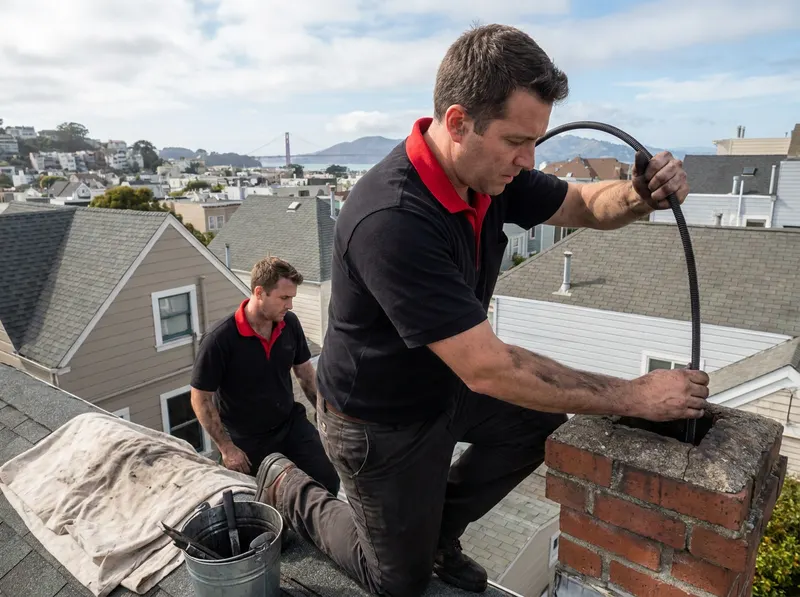
A chimney sweep and cleaning targets three deposits: black soot, sticky or glazed creosote, and physical blockage such as leaves or animal nesting. Creosote is the flammable byproduct of burning wood, and the National Fire Protection Association standard NFPA 211 recommends chimneys be inspected at least once per year and cleaned when deposits build up. The Chimney Safety Institute of America (CSIA) defines the cleaning that accompanies a routine visit as a Level 1 inspection, a visual check of the readily accessible interior and exterior, while a Level 2 inspection adds video scanning of the flue and is called for after a chimney fire, a property sale, or a change of fuel or appliance.
Decision-fit comes down to how the fireplace is used. A homeowner in Noe Valley or Glen Park who burns a cord of oak or almond each winter typically needs annual chimney sweeping, because seasoned hardwood still leaves measurable creosote over a season. A Pacific Heights or Presidio Heights household that lights only a handful of fires a year often needs cleaning every two to three years, but an annual Level 1 inspection is still the standard because a flue can hold debris even when it is rarely used. Homes near Ocean Beach and in the Sunset District and the Richmond District face salt-laden fog that accelerates corrosion on metal caps and dampers, so those visits frequently uncover cap rust that a photo record makes obvious.
The cleaning sequence is straightforward. First, drop cloths cover the hearth and floor. Second, a HEPA vacuum runs at the firebox to capture airborne soot. Third, rotary or hand brushes sized to the flue clear the liner top-to-bottom. Fourth, the smoke shelf and firebox are cleared and the interior is photographed. Fifth, the before/after images and any findings, a cracked clay tile, a missing cap, glazed creosote, are shown in plain language rather than a vague 'it's done.' Glazed creosote, the hard tar-like layer, does not brush off with a standard sweep and requires a separate chemical or rotary treatment, which is quoted before any work starts.
Combining chimney cleaning and cap installation in one visit is common and saves a second trip, because the cap seats at the flue top where the sweep already has roof or crown access. Many Bernal Heights and Cole Valley homes with older masonry chimneys have no cap or a damaged one, which lets rain, leaves, and animals into the flue, a stainless steel or copper cap solves that. A dumpster or debris pile is never involved; a sweep contains and carries out its own soot. A free on-site estimate confirms the exact price before work begins, since flue height, roof access on steep Twin Peaks and Sea Cliff lots, and buildup severity all move the number. Call (628) 201-5376 or send a photo for an estimate.
Every job gets a firm, written price after a free on-site visit.
Tell us about your chimney sweep & cleaning job in San Francisco and we'll send a clear, written quote, usually the same day.
 Hearthhero Chimney Sweep