San Francisco recognizes three inspection levels defined by NFPA 211 and taught by the Chimney Safety Institute of America (CSIA). A Level 1 inspection fits a chimney in regular use with no changes to the system, the…
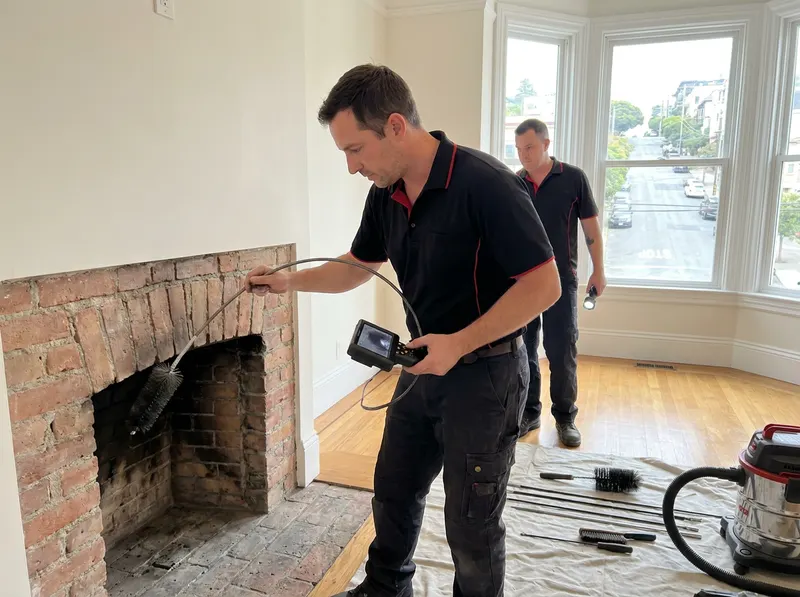
San Francisco recognizes three inspection levels defined by NFPA 211 and taught by the Chimney Safety Institute of America (CSIA). A Level 1 inspection fits a chimney in regular use with no changes to the system, the technician checks all readily accessible parts of the flue and connections. A Level 2 chimney inspection is the right choice when the situation has changed: a home sale, a switch from wood to gas, an earthquake, or after any chimney fire or flue-blockage event. A level two inspection adds a video camera pass through the full length of the flue plus access to attics, crawl spaces, and basements where the chimney is visible. A Level 3 inspection, which may involve removing masonry or drywall, is reserved for cases where a serious hidden hazard is suspected.
Older housing stock across San Francisco shapes what an inspection finds. Edwardian and Victorian homes in Noe Valley, Bernal Heights, and around the Alamo Square Painted Ladies frequently have unlined or clay-tile flues that develop cracks over decades. Fog-belt moisture in the Sunset District and the Richmond District accelerates crown spalling and cap rust near Ocean Beach and Lake Merced. Larger masonry chimneys in Pacific Heights, Presidio Heights, and Sea Cliff often serve two or more flues, which lengthens a Level 2 camera scan. Homes in the Marina, Glen Park, and Cole Valley built over soft or filled ground can show mortar-joint separation after seismic movement, a documented reason NFPA 211 calls for a Level 2 inspection after an earthquake.
The inspection sequence is straightforward. First, the firebox and damper are checked for creosote, soot, and obstruction. Second, the smoke chamber and flue liner are examined, on a Level 2, a camera is fed the full flue length to record cracks, gaps, or third-degree creosote glaze. Third, the exterior crown, cap, and masonry are reviewed for water entry. Fourth, findings are photographed and written up in plain language, with any defect tied to a specific chimney inspection and repair estimate line item. A chimney cleaning estimate is quoted separately when creosote buildup is measured rather than assumed.
An inspection is worth booking even for a rarely used fireplace: a dormant flue can host bird nests, debris, or a cracked liner that only shows on camera, and a Level 2 scan is the standard way to confirm whether the chimney is safe to light this season. If your fireplace has run normally with no changes, a Level 1 inspection is usually enough; if you are buying or selling, converting fuel, or acting after a fire or quake, a Level 2 chimney inspection is the correct level. The free on-site estimate lets a technician confirm the appropriate level and give you a fixed number before scheduling any cleaning or repair. Call (628) 201-5376 to make an appointment or to get a chimney inspected across San Francisco County.
Every job gets a firm, written price after a free on-site visit.
Tell us about your chimney inspection job in San Francisco and we'll send a clear, written quote, usually the same day.
 Hearthhero Chimney Sweep